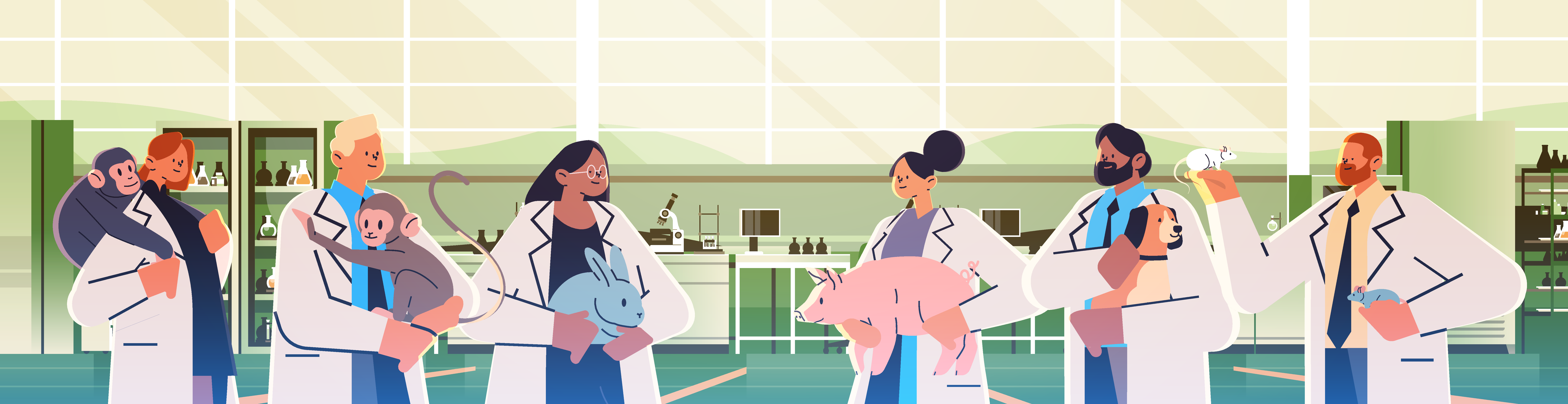
When most people picture a veterinarian, they imagine a clinic, a family dog, or perhaps a wildlife rescue center. But there is another world of veterinary medicine that rarely makes the news, one that takes place inside research facilities, diagnostic laboratories, and university medical centers. In biomedical research, veterinarians are not a background detail, but rather they are essential to the entire enterprise, shaping the science, protecting the animals, and bridging those two worlds to ensure the research is valid and ethical. Veterinarians in the research sector also benefit from holding broad authority over their patients’ care. Treatment decisions rest on the animal’s health and the veterinarian’s judgment without the limitations of competing pressures that can shape care in private practice.
At biomedical research institutions across the country, veterinarians hold a range of specialized roles. Three of the most important are clinical veterinarians, research veterinarians, and veterinary pathologists. Once you know what each of them does, it’s clearer how animal research works and why it’s conducted with such care and precision.
Clinical Veterinarians: The Primary Care Providers
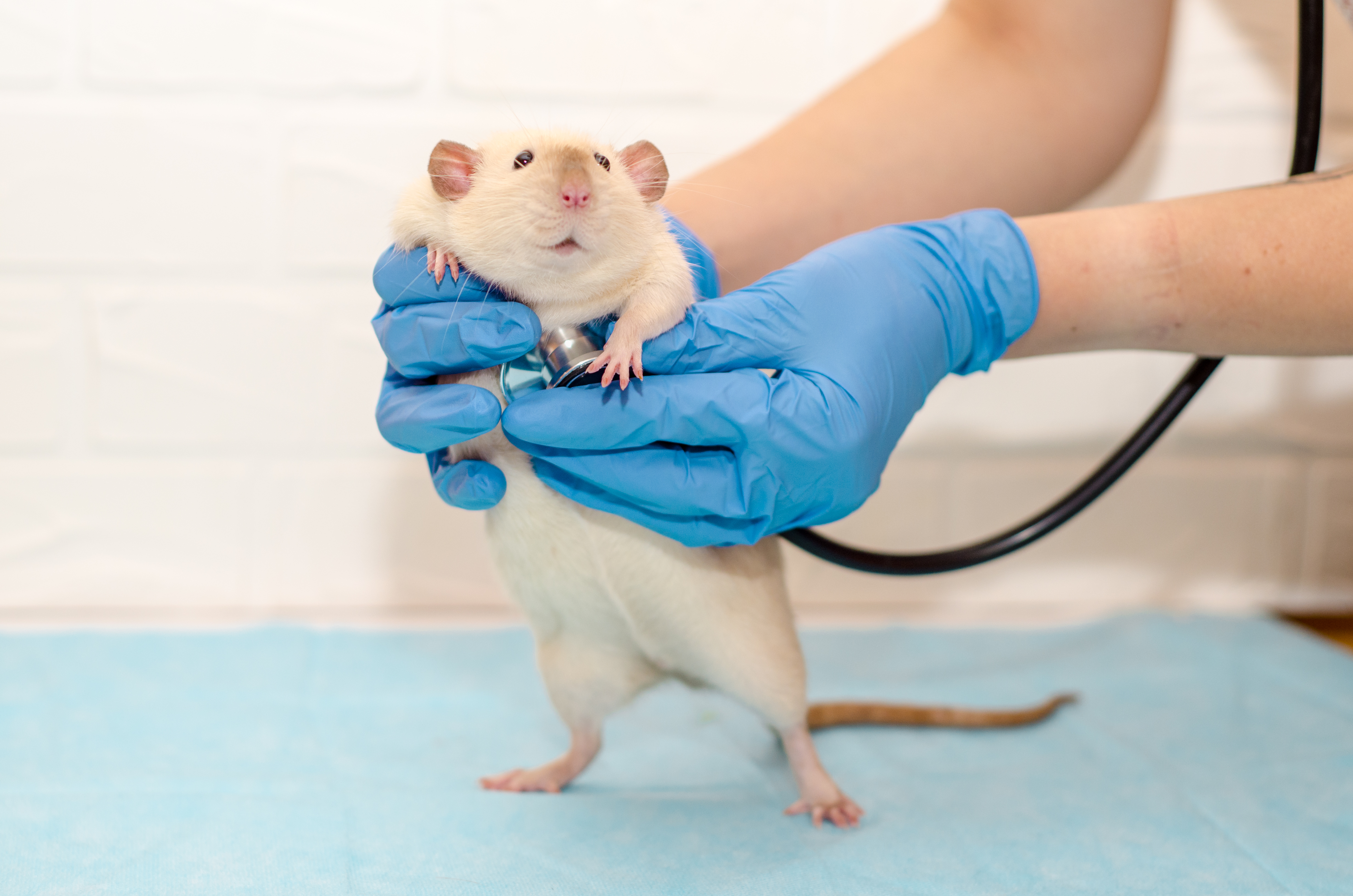
A clinical veterinarian is basically the traditional idea of what a veterinarian is and does, but their work is based in a research facility rather than an animal hospital. These professionals are responsible for the ongoing health and welfare of research animals, from routine wellness checks to emergency medical intervention.
A typical day for a clinical veterinarian may involve conducting physical examinations, diagnosing and treating illnesses, prescribing medications, overseeing anesthesia protocols, and monitoring post-operative recovery and care. They also develop and implement preventive care programs, prescribe special diets, establish biosecurity standards, and ensure that the animals in their care are housed in environments that support the animals’ physical and psychological well-being (National Research Council, 2004).
The clinical veterinarian is also the animal’s legal advocate. Under the Animal Welfare Act, every research facility must designate an Attending Veterinarian (AV) who holds direct or delegated authority over all activities involving animals. That individual has the authority to intervene in or pause any procedure if animal welfare is at risk, a safeguard written into federal law (7 U.S.C. §§ 2131 et seq., Animal Welfare Act). As the American College of Laboratory Animal Medicine (ACLAM) notes, the Attending Veterinarian is additionally a federally required voting member of the Institutional Animal Care and Use Committee (IACUC): the body that reviews and approves all research protocols involving animals (ACLAM, n.d.).
Beyond their clinical duties, these veterinarians serve as educators and consultants. Their responsibilities can include training research staff in proper animal handling, advising scientists on appropriate anesthesia and analgesia practices, and helping design procedures that minimize discomfort. Their presence at the intersection of science and animal welfare is a legal and ethical requirement.
Research Veterinarians: From Caregiver to Scientist
While clinical veterinarians focus mainly on delivering medical care, research veterinarians take on a second role: participation in the science itself. Some serve as principal investigators (PIs) on their own studies, like testing a new medication for cats or dogs. Others work alongside research teams, contributing the same veterinary medicine expertise they would in a clinic. However, a veterinarian PI does not have clinical oversight of the medical care of their study animals. A separate veterinarian, who is not part of the study, assumes that role to avoid a conflict of interest and ensure that a push for good data does not come before the health of the animal. Veterinarians can sometimes fill both roles: serving as the PI of their own study while providing clinical care to animals enrolled in others.
The National Research Council uses the term “comparative medicine veterinarian” to describe this broader category of professionals, defined as veterinarians who apply postgraduate research or clinical training to biomedical investigation (National Research Council, 2004). Their specializations can range across lab animal medicine, pharmacology, toxicology, genetics, microbiology, and virology.
Research veterinarians (and clinical veterinarians) play a role in the development and selection of animal models. Choosing the right species for a particular study requires extensive knowledge of anatomy, physiology, genetics, and the ways in which animal biology mirrors or differs from human biology. Research veterinarians advise on which species and strains are most appropriate for a given question, consult on the design of experimental procedures, and help investigators interpret results in a biologically meaningful way (ACLAM, n.d.).
Historically, this mixture of clinical training and scientific curiosity has led to major contributions to human medicine. Research veterinarians were among the first to isolate tumor-causing viruses, contributed to our understanding of Salmonella and Brucella, and helped develop surgical innovations such as hip-joint replacement and organ transplantation techniques (AVMA, 2007). This cross-species view can turn up insights human medicine would otherwise miss.
Board certification through ACLAM is the professional standard for both research and clinical veterinarians. ACLAM Diplomates must complete a training program (typically a three-year residency), pass a rigorous board examination, and demonstrate competency across clinical medicine, regulatory compliance, research methodology, and institutional management (ACLAM, n.d.).
Veterinary Pathologists: Reading The Story Tissues Tell
Where clinical and research veterinarians focus on living animals, veterinary pathologists specialize in the study of disease at the cellular and tissue level. The work is a bit like what a forensic pathologist does: reading tissues and cells for the story they tell about how a disease develops. Their tools include microscopes, staining techniques to label specific cells, and laboratory assays. Their work produces some of the most critical data in all of biomedical research.
There are two main subspecialties within veterinary pathology:
- Anatomic pathologists examine tissues and organs. This includes performing necropsies (the animal equivalent of an autopsy) to determine the cause of death and characterize disease processes.
- Clinical pathologists work primarily with body fluids, evaluating blood counts, serum chemistry, and cellular samples to assess health status and detect disease (Royal College of Pathologists, n.d.).
In biomedical research, veterinary pathologists serve a function that no other discipline can fully replicate. Every animal study generates tissue and fluid data that must be interpreted, and that interpretation requires someone who understands comparative disease processes across species. As one published review notes, veterinary pathologists play a critical role in understanding the translational validity of animal models, assessing whether the biological changes observed in a study are genuinely relevant to the human condition being investigated (Hoenerhoff et al., 2021).
Their work also supports the integrity of science itself. The same review emphasizes that as members of multidisciplinary research teams, veterinary pathologists help ensure accurate interpretation of pathology data, maximize rigor, and support reproducibility, all qualities that are essential for trustworthy research outcomes (Hoenerhoff et al., 2021). When pathology data is misread or poorly understood, scientific conclusions can be flawed. Veterinary pathologists help prevent that.
The American College of Veterinary Pathologists (ACVP) is the credentialing body for this specialty in the United States. Board-certified veterinary pathologists (Diplomates of the ACVP) work across academic institutions, government agencies such as the FDA and USDA, pharmaceutical and biotechnology companies, and contract research organizations (ACVP, n.d.).
A Shared Commitment To The 3Rs And Animal Welfare
All three roles share a foundation in the 3Rs framework (Replacement, Reduction, and Refinement) that governs ethical animal research. For clinical veterinarians, the 3Rs are applied in how they design care protocols that look for refinements that reduce distress. Research veterinarians lean on them when choosing animal models and advising on experimental design. And veterinary pathologists support the Reduction goal by ensuring that every animal enrolled in a research study yields the fullest, most reliable data possible.
Together, these professionals form a team of expertise and accountability in the care of research animals. They are the reason animals in accredited facilities receive care that is thorough, science-informed, and centered on welfare. They are a major reason why the biomedical research community can credibly argue that animal studies are done seriously and with genuine care for the animals.
Why This Matters
Public understanding of animal research tends to focus on the science itself, the diseases being studied, and the treatments being developed. However, the people who make that science possible and ensure it is conducted ethically deserve attention too. Veterinarians in biomedical research occupy a unique position to protect the animals while enabling the research that saves lives.
Facilities that staff board-certified veterinary professionals across these three specialties are showing a commitment to doing this work right.
References
American College of Laboratory Animal Medicine (ACLAM). (n.d.). ACLAM Diplomates. Retrieved from https://www.aclam.org/certification/aclam-diplomates
American College of Veterinary Pathologists (ACVP). (n.d.). What is veterinary pathology? Retrieved from https://acvp.org/about/what-is-veterinary-pathology/
American Veterinary Medical Association (AVMA). (2007). Veterinarians in biomedical research: A teacher resource. Retrieved from https://www.avma.org/sites/default/files/resources/biomedical_bgnd.pdf
Animal Welfare Act, 7 U.S.C. §§ 2131 et seq. U.S. Department of Agriculture.
National Research Council. (2004). National need and priorities for veterinarians in biomedical research. National Academies Press. https://doi.org/10.17226/10878
Hoenerhoff, M. J., Meyerholz, D. K., Brayton, C., & Beck, A. P. (2021). Challenges and opportunities for the veterinary pathologist in biomedical research. Veterinary Pathology, 58(2), 258–265. https://doi.org/10.1177/0300985820974005
Royal College of Pathologists. (n.d.). Become a veterinary pathologist. Retrieved from https://www.rcpath.org/discover-pathology/careers-in-pathology/become-a-veterinary-pathologist.html