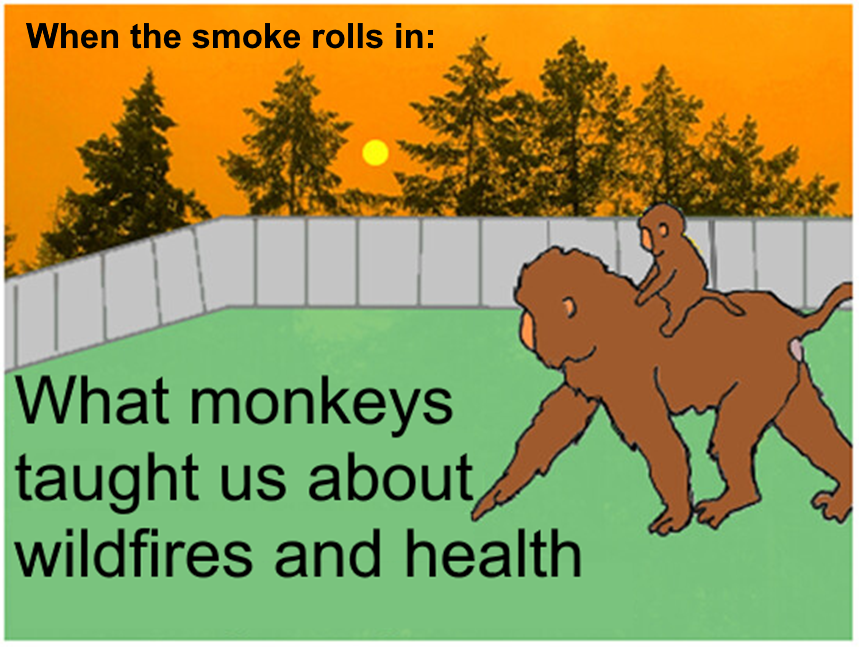
If you were in the Portland metro area around Labor Day in September 2020, you remember the skies turning an eerie orange and the air smelling like a campfire, but not the cozy kind. During the Labor Day fires, air quality in the region reached levels that health officials called hazardous. Most of us retreated indoors, closed our windows, and waited it out. But wildlife, agricultural animals, and many of the monkeys at the Oregon National Primate Research Center (ONPRC) couldn’t do that. For 9 consecutive days, they breathed air that exceeded federal safety limits, reaching levels more than 7 times the EPA’s safe threshold. Because the researchers and veterinarians keep meticulous health and breeding records on every animal, something that is nearly impossible to do in wild populations or even in human hospital systems, they were in a unique position to ask: what did the smoke actually do? What happened to them in the months that followed turned into one of the most detailed studies of wildfire smoke’s health effects ever conducted.
What They Found
1: Pregnancy loss skyrocketed
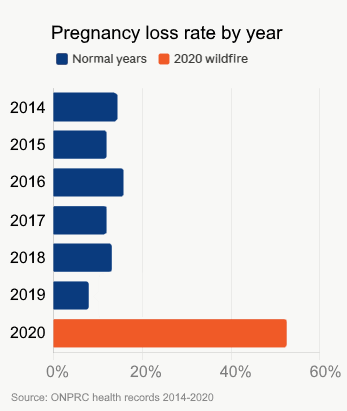
In a normal year, during autumn, roughly 1 in 8 monkey pregnancies at the ONPRC end in loss. In the months following the 2020 wildfires, that number jumped to more than 1 in 2.
- Normal years (2014 to 2019): ~12.7% pregnancy loss
- After the Labor Day fires (2020): 52.4% pregnancy loss
- Pregnancies were 4 times more likely to end in loss compared to previous years
2: Young infants were hit hardest by respiratory illness
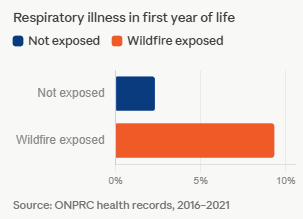
Infants were 4.5 times more likely to be diagnosed with a respiratory condition in the year that followed the wildfires, including pneumonia and pulmonary edema.
- Normal years (2014 to 2019): 2.3% of infants developed respiratory illness
- After the Labor Day fires (2020): 9.3% of infants developed respiratory illness
3: Hospitalization rates and overall all-cause mortality trends were concerning
While not statistically definitive, wildfire-exposed infant monkeys showed greater-than-normal general health detriment.
What Does This Matter Beyond Monkeys?
Macaques share roughly 93% of their DNA with humans. Their immune systems, respiratory systems, and reproductive biology are remarkably similar to ours. When wildfire smoke harms their pregnancies and their infants’ lungs, it’s a signal we can’t ignore for human health, particularly for:
- Pregnant people living near wildfire-prone areas
- Newborns and infants
- Anyone with pre-existing respiratory conditions
Large human studies have also linked wildfire smoke to low birth weight and preterm birth, but isolating cause and effect in human populations is difficult. The ONPRC’s carefully monitored macaque colony, free of COVID-19, is tracked daily and has decades of health records, offering a uniquely clean window into what wildfire smoke actually does to a body. Wildfire seasons are getting longer. If global temperatures rise unchecked, scientists predict the chances of large fires in regions like ours could increase eightfold by the end of the century. Unfortunately, the animals at the ONPRC, like other outdoor animals, had no choice but to be exposed to the wildfire smoke. But what they experienced and what the researchers learned from it may one day help protect pregnant women, newborns, and vulnerable communities when the next wall of smoke rolls in.
Reference
Read the published, peer-reviewed journal article detailing this research below:
- Berns, K., & Haertel, A. J. (2024). Excess prenatal loss and respiratory illnesses of infant macaques living outdoors and exposed to wildfire smoke. American Journal of Primatology, 86(5), e23605. https://doi.org/10.1002/ajp.23605