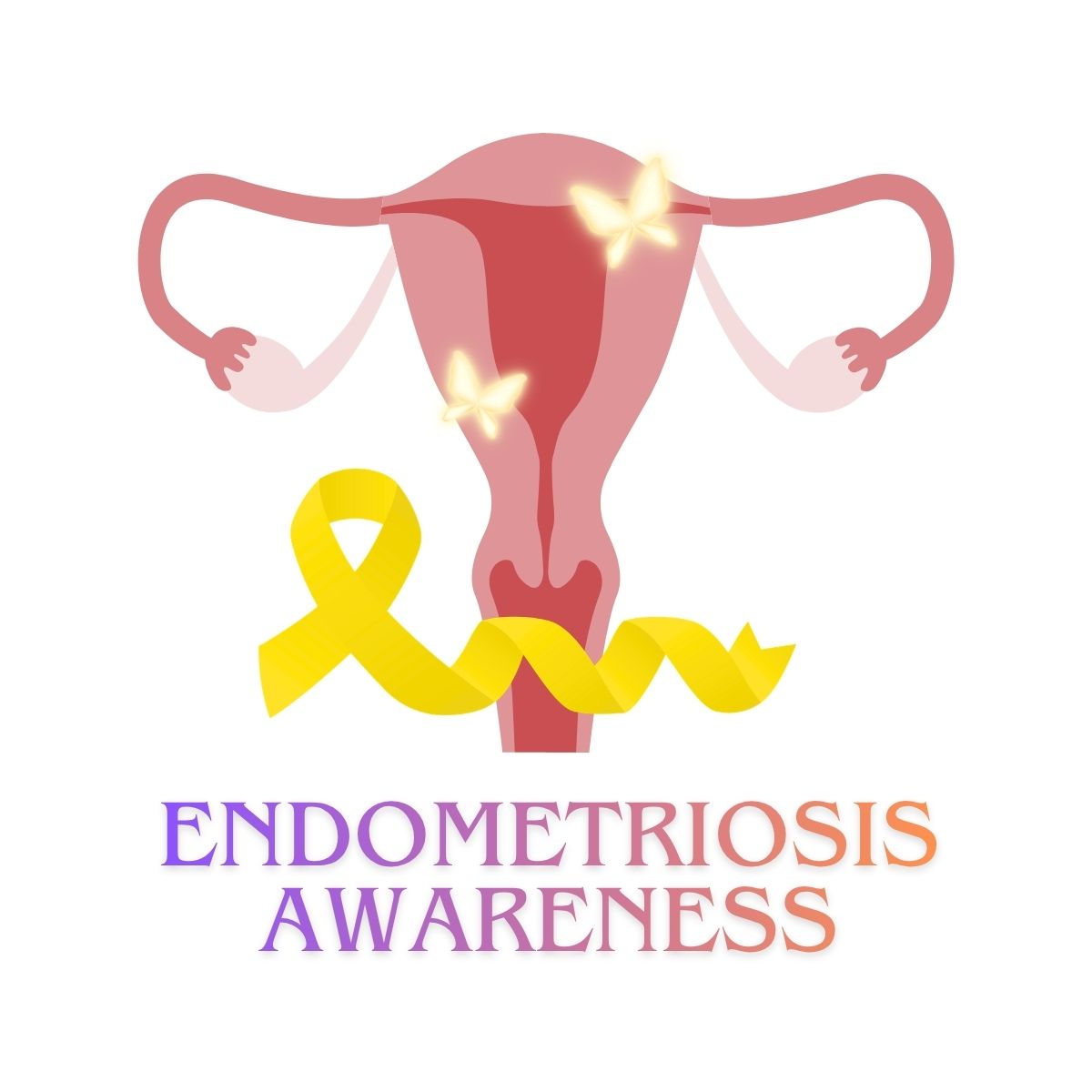
 Image created using Canva
What Is Endometriosis?
Endometriosis is a complex and painful disorder in which tissue similar to the endometrium (innermost layer of the uterus) forms lesions outside of the uterus. These areas of abnormal tissue then cause bleeding within the pelvis and abdomen each month during menstruation. The lesions typically affect the ovaries, fallopian tubes, and pelvic organs, causing painful, chronic inflammation and abdominal adhesions that may impair fertility. An estimated 10% of women of reproductive age worldwide will experience endometriosis, and 35-50% of people experiencing pelvic pain or infertility suffer from the disorder.
Is There A Cure?
There is currently no cure for endometriosis, but there are ways to treat patients. Surgical removal of the lesions can improve fertility, but lesions often recur after surgery and continue to cause ongoing pelvic pain. Unfortunately, all approved medical treatments rely on hormone treatment or hormone suppression to slow lesion growth, and like surgery, the disorder returns after treatment is completed. Researchers’ main goal is to find new therapies that can better manage and hopefully cure this disabling condition.
How Can We Study Endometriosis?
Endometriosis occurs naturally in menstruating people and nonhuman primates, including rhesus monkeys at the Oregon National Primate Research Center (ONPRC). Researchers at the center employ rhesus macaques to discover new therapies to remove endometriotic lesions and eliminate the inflammation associated with the disorder. In a collaborative effort with Oregon State University, researchers have identified a population of immune cells responsible for endometriosis-related inflammation. These cells play a role in both the development of the disorder and seem to mediate chronic pelvic pain linked to endometriosis, making them an excellent target for therapeutics.

How Can We Develop A Cure?
Researchers have developed a novel nanomedicine-based method to reduce inflammation associated with endometriosis, which correlates with pain and lesion recurrence. Additionally, there is an ongoing collaboration utilizing nanoparticles (tiny particles thousands of times smaller than the width of a human hair) loaded with a dye that produces a fluorescent signal to identify microscopic lesions that are responsible for persistent clinical signs. This dye can also generate heat, capable of destroying endometriosis cells when exposed to near-infrared light. Think of these nanoparticles as tiny delivery trucks, carrying this dye directly to the abnormal cells causing the disease while skipping the healthy ones. This process is similar to how chemotherapy targets only cancerous cells.
How Does Primate Research Help Develop Human Cures?
Using rhesus macaques, that develop the exact same disease as human endometriosis, researchers have demonstrated that nanoparticles can effectively accumulate in endometriotic lesions, targeting and eliminating microscopic lesions too small for surgery. The same particles can also be loaded with magnetic iron oxide, which can be visualized with non-invasive imaging like MRI to locate the endometriotic lesions and even heat and destroy the target cells without damaging healthy tissue.
What Is The Future Of This Research?
The team spearheading these efforts has received two research grants from the National Institutes of Health to continue evaluating the effectiveness of these nanoparticles in monkeys with endometriosis, aiming to advance these approaches to human clinical trials.
The ultimate goal is to provide clinical tools that will end the suffering experienced by millions of people with endometriosis. The approaches described above were initially tested in the lab using non-animal research methods, then refined and evaluated for safety and effectiveness before they were adapted to studies in animals. Further development and validation of these new preclinical tools can only be achieved with the help of nonhuman primates that naturally develop endometriosis similarly to people. These new treatments will not only help human medicine, but also veterinary medicine, since monkeys also suffer from this exact disease.
Learn More
Check out a few research publications and news articles on Oregon’s role in understanding and treating endometriosis below:
Peer Reviewed Research from Oregon Scientists
Nanomedicine and endometriosis
Slayden, O. D., Luo, F., Park, Y., Moses, A. S., Demessie, A. A., Singh, P., Korzun, T., Taratula, O. R., & Taratula, O. (2024). Targeted nanoparticles for imaging and therapy of endometriosis. Biology of Reproduction, 110(6), 1191-1200. https://doi.org/10.1093/biolre/ioae073
Park, Y., Demessie, A. A., Luo, A., Taratula, O. R., Moses, A. S., Do, P., Campos, L., Jahangiri, Y., Wyatt, C. R., Albarqi, H. A., Farsad, K., Slayden, O. D., & Taratula, O. (2022). Targeted nanoparticles with high heating efficiency for the treatment of endometriosis with systemically delivered magnetic hyperthermia. Small, 18(24), e2107808. https://doi.org/10.1002/smll.202107808
Moses, A. S., Demessie, A. A., Taratula, O., Korzun, T., Slayden, O. D., & Taratula, O. (2021). Nanomedicines for endometriosis: Lessons learned from cancer research. Small, 17(7), e2004975. PMID: 33491876. https://doi.org/10.1002/smll.202004975
Animal models, mechanisms, and risk factors
Luo, F., & Slayden, O. D. (2025). Attenuation of ampullary Anoctamin 1 by the peritoneal fluid in rhesus macaques with spontaneous endometriosis. Biology of Reproduction, 112(2), 286-296. https://doi.org/10.1093/biolre/ioae173
Slayden, O. D., Luo, F., & Martin, L. D. (2023). A protocol for creating endometriosis in rhesus macaques (Macaca mulatta). Journal of Medical Primatology. PMID: 37849073. https://pubmed.ncbi.nlm.nih.gov/37849073/
Bishop, C. V., Takahashi, D. L., Luo, F., Sidener, H., Martin, L. D., Gao, L., Fei, S. S., Hennebold, J. D., & Slayden, O. D. (2023). The combined impact of testosterone and Western-style diet on endometriosis severity and progression in rhesus macaques. Biology of Reproduction, 108(1), 72-80. PMID: 36173894. https://doi.org/10.1093/biolre/ioac183
Clinical care and health economics
Bohn, J. A., Bullard, K. A., Rodriguez, M. I., & Ecker, A. M. (2021). Stepwise approach to the management of endometriosis-related dysmenorrhea: A cost-effectiveness analysis. Obstetrics & Gynecology, 138(4), 557-564. PMID: 34623067. https://doi.org/10.1097/AOG.0000000000004536
News Coverage and Public Conversations
OHSU News. (2022, May 9). Nanoparticle technology could be new, non-invasive treatment for endometriosis. Oregon Health & Science University. https://news.ohsu.edu/2022/05/09/nanoparticle-technology-could-be-new-non-invasive-treatment-for-endometriosis
Oregon State University News. (2022, April 18). Nanoparticles developed at OSU show promise for locating, removing endometriosis lesions. https://news.oregonstate.edu/news/nanoparticles-developed-osu-show-promise-locating-removing-endometriosis-lesions
Miller, D. (Host). (2022, April 29). Nanotechnology may point to a future treatment for a common gynecological condition [Audio interview with Oleh Taratula and Ov Slayden]. Think Out Loud, Oregon Public Broadcasting. https://www.opb.org/article/2022/04/29/nanotechnology-may-point-to-a-future-treatment-for-a-common-gynecological-condition/
Ecker, A. (n.d.). Severe menstrual pain is NOT normal: Six myths about endometriosis. OHSU Center for Women’s Health. https://www.ohsu.edu/womens-health/severe-menstrual-pain-not-normal