
The Future of the Oregon National Primate Research Center

Science, Animal Welfare, and the Path Forward.

Resolution Update: July 27, 2026

After six months exploring sanctuary conversion, the OHSU Board passed Resolution No. 2026-07-27, a strategic framework for the ONPRC’s future. The conclusion was clear: a full sanctuary transition is not financially feasible, and much of the science cannot simply be moved elsewhere.

Despite claims from critics, New Approach Methodologies (NAMs) are not yet capable of replacing animal models for complex biological systems. Most organ systems still lack suitable NAMs, and critical research areas, including obesity, fetal development, and neurological disease, cannot be modeled without living systems. The resolution acknowledges this reality: research will not be stopped in areas that lack a validated NAM. The science conducted at ONPRC is irreplaceable and necessary for advancing treatments that save human lives.

Advance Alternatives Responsibly

Invest in NAMs development while acknowledging current scientific limitations. Alternatives must be validated before they can replace proven methods.

Irreplaceable Science Continues

The research at ONPRC cannot be replicated elsewhere or replaced by current technology. This work is essential and must continue.

Protect Animal Welfare

Keep ONPRC veterinarians, behaviorists, and care staff central to every decision about the animals in their care.

Oregonians are not asking you to cut first and hope the alternatives catch up. They’re asking you to validate the alternatives first, and let the science set the pace.

Oregon Voices for Biomedical Research, remarks to the OHSU Board of Directors, July 27, 2026

The ONPRC Story

1962
Center Founded
Oregon Regional Primate Research Center opens in Hillsboro, OR, joining the national primate research network.
1962–2024
60+ Years of Discovery
World leader in HIV, neurological, reproductive, and metabolic disease research. The ONPRC officially becomes affiliated with OHSU in 1998.
2025
Misinformation Attacks
PETA, PCRM and other animal activist groups launch coordinated campaigns with false claims.
Feb 2026
Sanctuary Evaluation
Board orders six-month feasibility study under political pressure.
July 2026
Evidence Wins
Resolution passes. Research continues with renewed 3Rs commitment.
62+Years of Discovery
4,500+Non-Human Primates
450+Staff & Trainees
$65.9MAnnual Research Funding

A Look Inside ONPRC

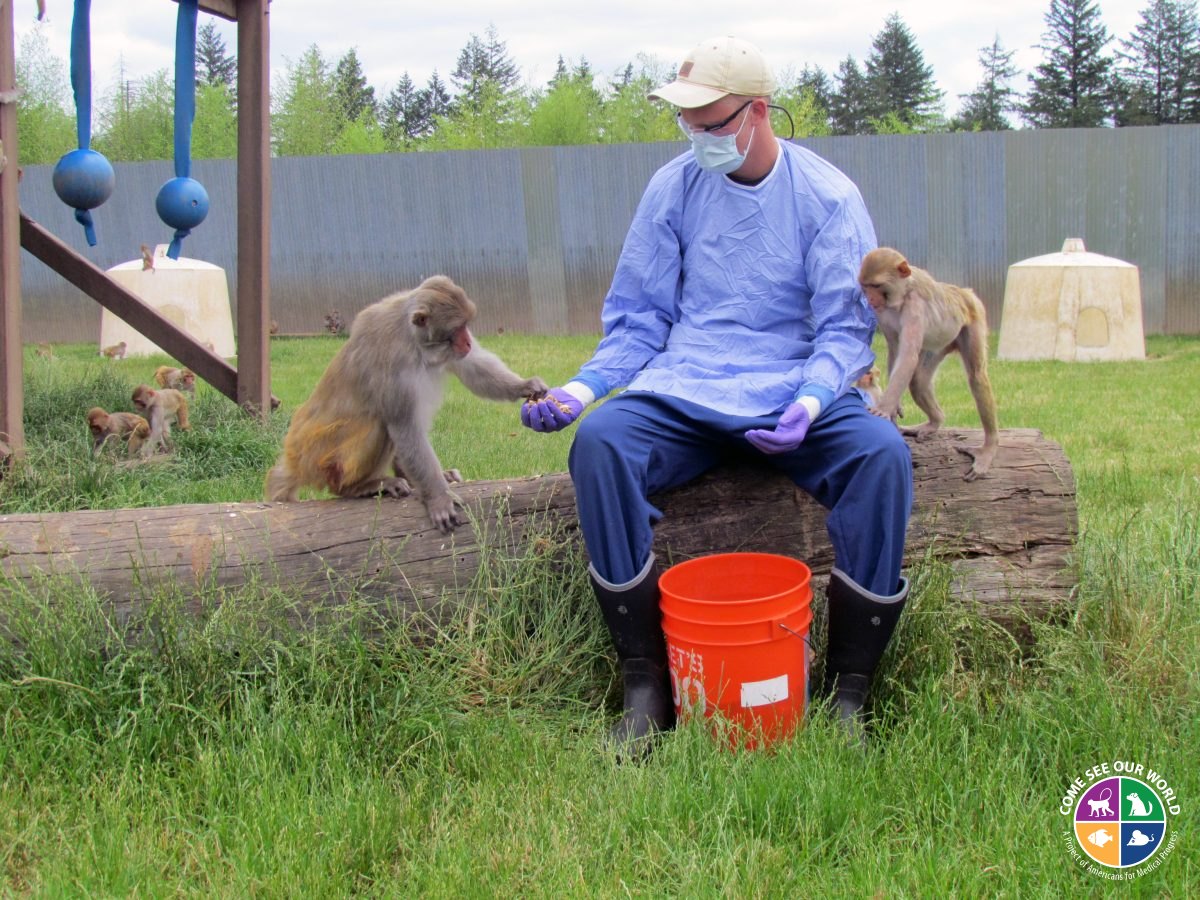
Photo: ONPRC/OHSU via comeseeourworld.org

Trainer and Rhesus Macaque Colony

This is the Oregon National Primate Research Center Nonhuman Primate Training Specialist. She is training a monkey, Finch, in a group to take medication, which allows him to stay in his colony, instead of being removed to the hospital. Avoiding such removals helps to reduce not only the stress to the monkey, but also helps maintain stability across the whole group.

The 3Rs: Oregon's Commitment

The resolution commits OHSU to the three principles that have guided ethics in animal research: Replacement, Reduction, and Refinement. The ONPRC has practiced these principles for decades and the resolution ensures they remain central to every decision.

Replacement

ONPRC scientists have been developing New Approach Methodologies (NAMs) for over a decade. Researchers pair non-animal models with primate work, using alternatives for early work while the animal model confirms what alternatives cannot yet determine on their own.

Reduction

Reduction means designing studies so each animal yields more data. ONPRC’s investment in advanced imaging allows scientists to take repeated, noninvasive measurements from the same animal over time, replacing designs that once required separate groups.

Refinement

Refinement is where ONPRC’s record is deepest. Welfare science is itself a field of study at the center, with innovations like cooperative training methods that reduce stress and improve both animal welfare and research quality.

Research at the ONPRC

Ongoing Research in the 5 Research Divisions at the ONPRC

Neuroscience

Gene therapy for inherited blindness.

Understanding causes of age-related macular degeneration.

Multiple Sclerosis modeling. Huntington’s Disease evaluation using PET/MRI.

Pathobiology & Immunology

Vaccine development for HIV, TB, Yellow Fever, and Malaria.

Monoclonal antibody treatment to protect babies born to HIV+ mothers.

Immunotherapy development for cancer.

Reproductive & Developmental Sciences

Restoring fertility in childhood cancer survivors.

Improving pregnancy outcomes in Hepatitis B patients.

Protecting fetal lung development from prenatal nicotine.

Anesthesia safety for infants.

Metabolic Health & Disease

Cell therapy for Type-1 diabetes.

How maternal obesity affects fetal immune development.

How long-term use of anti-HIV drugs affects insulin resistance.

Genetics

How human brains develop, and developmental disorders.

Rare disease modeling including Angelman Syndrome, Batten’s Disease, and Juvenile Myoclonic Epilepsy.

Paternal contributions to offspring health.

Vaccine & Gene Therapy Institute

The VGTI is a vaccine-development institution built on the OHSU West Campus in 2000-2001. Its scientists work closely with ONPRC scientists, conducting pre-clinical development of drugs and vaccines in tissue culture, small animals, and primates on campus.

HIV Vaccine Progress

A VGTI-developed AIDS vaccine candidate has shown the ability to completely clear virus from the body in monkeys. Phase 1 clinical trials of this HIV/AIDS vaccine began in 2021, licensed to Vir Biotechnology.

COVID-19 Response

VGTI scientists demonstrated COVID-19 immunity in monkeys post-infection, developed prototype vaccines showing protection in monkeys, and identified therapies to reduce lung complications. The Director of the VGTI was appointed to review and approve COVID-19 vaccines for Oregon.

Gene Therapy & Cures

A single experimental shot reduced HIV levels in monkeys 1,000-fold. Stem cell transplants show promise for HIV cure. One-time gene therapy injection could provide lifetime HIV treatment.

Animal Welfare & Oversight

A level of oversight and care not available to a sanctuary.

AAALAC Accreditation

The ONPRC has maintained rigorous full accreditation with AAALAC International for over 50 years. The most-recent inspection received ‘exemplary’ adherence to guidelines. The ONPRC is registered with the USDA and subject to strict federal regulations under the Animal Welfare Act, with regular unannounced inspections.

IACUC Oversight

All research is reviewed by an Institutional Animal Care and Usage Committee (IACUC) that includes scientists, veterinarians, and community members.

Exceptional Animal Care

The ONPRC is world renown for its animal care practices and standards. 18 veterinary and behavioral sciences faculty and 165 animal care staff ensure the highest standards of care.

The Financial Reality: What the 6 Months Revealed

Critics claimed sanctuary conversion could be funded by redirecting existing ONPRC funds. The six-month feasibility study proved otherwise.

Claim: Redirect NIH Funds to Sanctuary

What they said: Existing research funding could pay for sanctuary operations.

What the study found: Federal law prohibits this. NIH grants are legally restricted to approved research purposes. Redirecting funds would require an act of Congress.

Claim: Conversion Would Save Money

What they said: Ending research would reduce costs for OHSU.

What the study found: Huron Consulting estimated conversion costs at $220-291M over 8 years—with no sustainable funding source identified.

Claim: OHSU Can Absorb the Transition

What they said: The institution would adapt to closure.

What the study found: The ONPRC represents 20% of OHSU’s total NIH portfolio. 84% of ONPRC funding is external—closure doesn’t return funds to OHSU, it eliminates them from Oregon entirely.

These findings directly informed Resolution 2026-07-27’s rejection of sanctuary conversion.

Support the Science That Saves Lives

Contact Your RepresentativesStand with Science

Publications

Peer-reviewed research by Oregon’s biomedical science programs at the ONPRC & VGTI.

1,482 publications produced by Oregon Scientists. Last updated August 23, 2026.

Oregon Voices for Biomedical Research does not reflect the views or opinions, or speak on behalf of the Oregon Health & Science University or the Oregon National Primate Research Center.